“According to Dr. Sander Bokonyi, the late, well-known and respected Hungarian archaeozoologist, the introduction of the ‘Turkoman’ from Central Asia and northern Persia was the catalyst for the development of Europe’s better breeds of horses from 4·000 B.C. onwards. The Caspian and Turkoman are the only pure forms of the original types of the native horse.
AND
“According to Dr. E. Gus Cothran, a leader in the field of equine genetics and analysis of DNA and gene markers (University of Kentucky), research on blood samples taken from Caspians and Turkomans indicates these two are ancestral to ALL forms of the Oriental horse…”
These are excerpts from “The Original Ancestors of the Turkoman, Caspian Horses” research by Louise L. Firouz (1998) following extensive bone and blood sampling investigation from horse breeds around the world. Read the full text here: https://caspianhorse.org/wp-content/uploads/2018/06/1998-The-Original-Ancestors-of-the-Turkoman-Caspian-Horses.pdf
The crucial dynamic in this study discussion is that the Turkoman, Caspian, and ancient indigenous Yabou horse show close genetic clustering together, with the Akhal-Teke as the surviving Turkoman descendant in the next closest branch—but they are all distinctly set apart and set before the Arabian cluster. This not only supports later findings of distinct subclade groups between Turkoman and Arabian horses (“Y Chromosome Uncovers the Recent Oriental Origin of Modern Stallions”, 2017), but it provides further evidence of the Caspian and Turkoman as key heritage horses to almost all modern breeds.
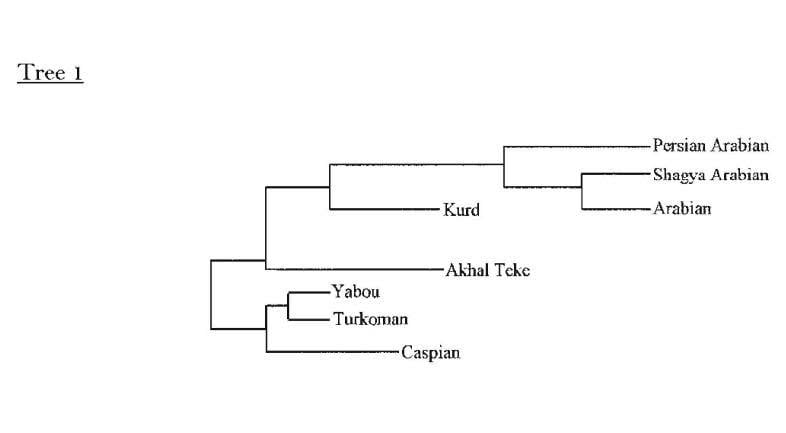
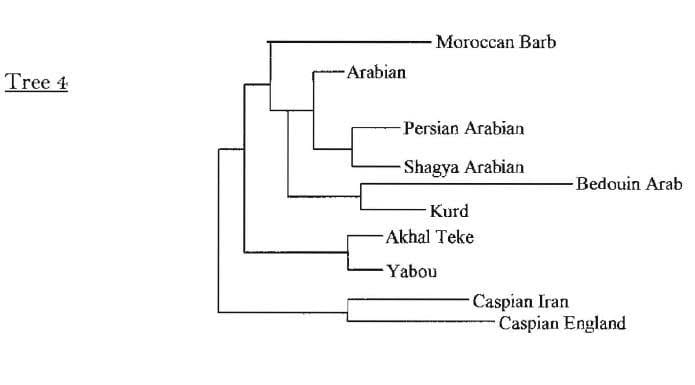
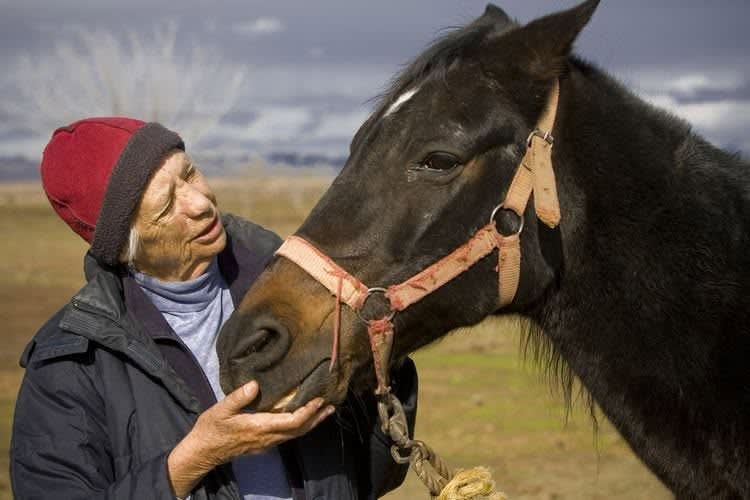
Photo of Louise Firouz from Alchetron; diagrams from the research linked above.