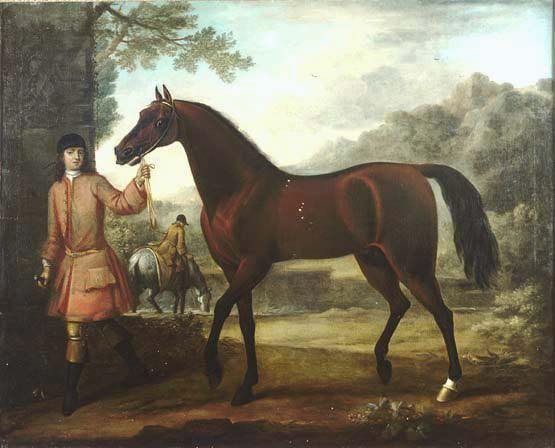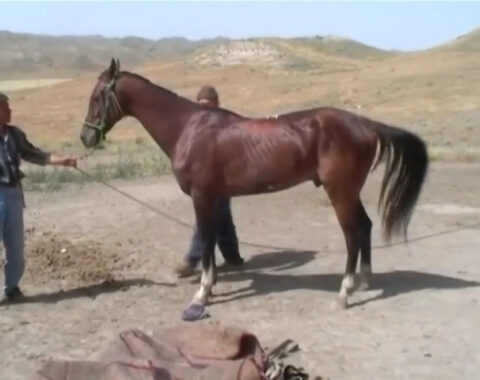

The study “Genome Diversity and the Origin of the Arabian Horse” (Cosgrove et al., 2020) is one of the most fantastic recent genetic findings revealing the true narrative of the Akhal-Teke of antiquity, the Turk horse, and their significant role in founding the Thoroughbred.
In history, Turks and Arabians were often linguistically “grouped” together in name, sometimes called “oriental” or one given the name of the other. The fact that they were traded, stolen, and bred across overlapping regions added to origin and name confusion. But genetic research reveals now that they are two distinct halotype groups, and the TB traces back to the Turkoman halotype group not the Arabian’s. This is one of 2 such major recent studies that have reviewed genetic relationships between the Thoroughbred, Arabian, and Turkoman horse. The other is “Y Chromosome Uncovers the Recent Oriental Origin of Modern Stallions” (Wallner et al., 2017) with likely more research underway given the importance of the Thoroughbred not just historically but economically as a multi-billion dollar breed industry.
Today, the Akhal-Teke still carries the famous natural speed and stamina that once made the Turk or Fergana horse the most sought after mount across Eurasian empires. It is no surprise then, that this illustrious breed would be used to forge the world’s top racing stock.
From The Western Thoroughbred:
“As science advances, we are answering previously unanswerable questions. We are also disproving previously widely held beliefs.
It was once “common knowledge” that Thoroughbreds were descended from Arabians, but we now know that is not true.
While the breed’s three foundation sires – The Byerley Turk, Darley Arabian and Godolphin Arabian – were brought from the Middle East and believed to be Arabian or Barb, genetic studies suggest otherwise. The Darley Arabian and Godolphin Arabian were most likely Turkoman horses, an ancient breed that influenced the modern Akhal-Teke.
Thoroughbreds have insignificant Arabian DNA markers in their genome. In fact, Thoroughbred DNA actually appears more frequently in modern Arabian lines, which means that the Thoroughbred influenced the Arabian, not the other way around.”