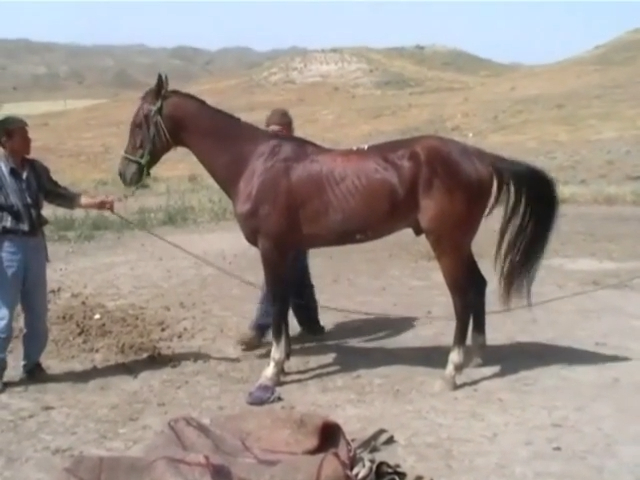

This video is an exciting find of Louise Firouz, an American-Iranian known worldwide for her rediscovery of and preservation work for the Caspian horse, viewing Turkoman horses with an interviewer at Jargalan Turkman Stud, Iran in 2002. Breeder presenting his horses was Dr Abdol Jalil Ghiadi, who purchased Turkoman horses from Louise and focused on breeding good bone and racing conformation. Turkoman horses, like these, which include popular crosses of Teke, Goklan, and Iomud (said as it is sometimes written “Yomut”) are still raced in Iran and other Turkic regions. (Akhal-Tekes are also still raced today in Turkmenistan and Russia, carrying on this practice.)
You might note the use of multiple other breeds including Thoroughbred and even spotted horses in this herd. Due to the mixing of blood, these Turkoman horses cannot be registered as Akhal-Teke–which draws its name from the Akhal oasis of the Turkoman Teke tribe, and is managed by the closed Russian Studbook (following the breed’s near-extinction recovery work in the 1970s). The Akhal-Teke has survived as the oldest purebred in the world. But horses of other Turkoman tribes, like the Iomud and their horses, do still endure today–evolved and bred to fit more modern needs.
Louise points out some of the key qualities and conformational strengths of these horses, as well as some distinctions between the various line contributions. In addition to natural speed, jumping skill and longevity of these horses is also mentioned.
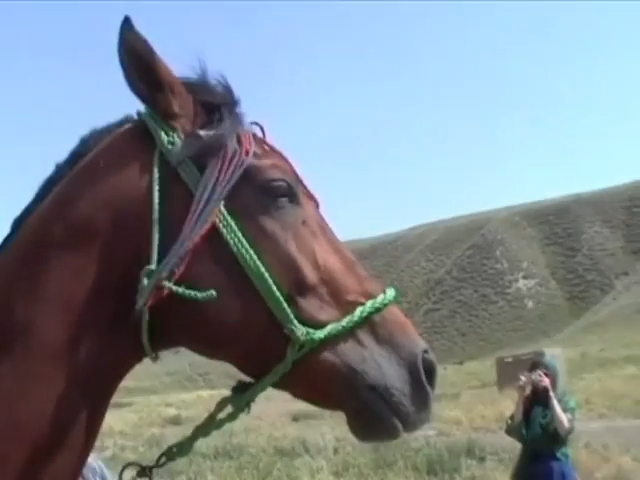
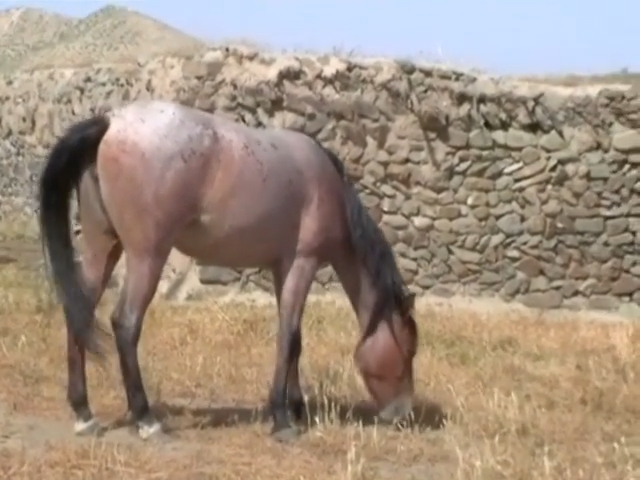
The first horse shown is a young half Akhal-Teke stallion (1st and 2nd image). Later there is an Iomud x TB stallion who did well at the local races. And near the end of the clip is a 1/4 Akhal-Teke mare with spots (3rd image)–a cross similar to horses we witnessed in the Kyrgyzstan mountains with Teke metallic coats and spots. It is possible these spots come originally from the “celestial spotted horses of Central Asia” (and our other heritage breed focus): the Chaar Appaloosa. In research around the Chaar Appaloosa, one of our questions is about the probability that Turk horses have interbred historically with the spotted horses of Central Asia, as both breed populations have been traded across the stans and Silk Road. Seeing spots in this herd of Turkoman horses reinforces that idea.
Watch the full video here: https://www.youtube.com/watch?v=vBCgVwFNPD4
Screenshots from the video by Museum of the Horse.